Dog Grooming in Tampa
Best Havanese Haircuts & Coton de Tulear Haircuts
Medium Length Easy Maintenance Trim
Medium Length Easy Maintenance Trim
Medium Length Easy Maintenance Trim

This style is 1" long on the trunk of the body with the legs one half inch longer, the face and bangs are trimmed in balance with the total look of the dog,
The ears and tail can be kept long or trimmed up.
3-4 inches long, shaggy look
Medium Length Easy Maintenance Trim
Medium Length Easy Maintenance Trim
This style keeps a scruffy appearance while trimming the coat up. This is a high maintenance style.
The head and ears are rounded and the tail is kept long.
Full Coat
Medium Length Easy Maintenance Trim
Long with bangs
This is the breed standard style for the Coton de Tulear as well as the Havanese. This style leaves the coat fully natural with only the pads of the feet clipped, the feet lightly trimmed, and snipped a little under the tail.
Long with bangs
Long with bangs
This style is kept long and full with a light bang and rounded feet.
Tassel top
This style is about a quarter inch long on the trunk of the body, and about one to one and a half inches long on the legs.
The face is trimmed in a rounded shape and the ears are bluntly trimmed. The top knot and bangs are long and pulled up into a ponytail that is trimmed into a fan so that it does not fall into the eyes.
A side view of the Medium Length Easy Maintenance Trim

Full coat
Full coat
Full coat
This style leaves the coat fully natural with only the pads of the feet clipped, the feet lightly trimmed, and snipped a little under the tail.
Services
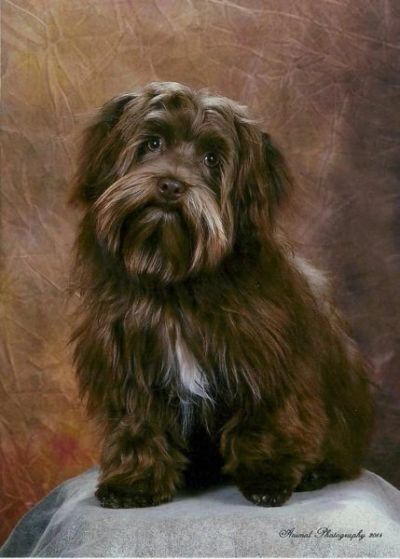
Full Service Package
Full service package for dogs up to 20 lbs. includes tooth brushing, washed twice with a salon bath with premium shampoo and conditioner, we provide an ear wash for healthy ears, blow dry, pedicure with nails trimmed and filed, 15 minutes of de shedding and brushing, adorable handmade finishing touches and cologne are available on request. Plus the haircut that best suits your dog's needs and your specifications.
Average fee *$85.-$95. Average time in the salon 1.5-2 hours, however this can fluctuate more or less, depending on the condition and behavior of the dogs ahead of yours, as well as the condition and behavior of your own dogs.
*Extra thick and/or hand scissored coats can run up to $115.
Bath Only Package
Bath service package for dogs up to 20 lbs. includes tooth brushing, washed 2x with premium shampoo and conditioner, we provide an ear wash for healthy ears, blow dry, pedicure with nails trimmed and filed, plus 15 minutes of de shedding and brushing. No trimming is included. Adorable finishing touches and cologne are available on request.
Average fee $55.-$65. Average time in the salon 1- 1.5hours, however this can fluctuate more or less, depending on the condition and behavior of the dogs ahead of yours, as well as the condition and behavior of your own dogs.
More information
To avoid disappointment, please have your pet brushed and combed before the appointment. We cannot accept dogs with matted hair, broken skin, eye ulcers, severe ear infections, heart conditions, and dogs over 16 years old.
The best tools to maintain your dog's coat
The Pin brush

The pin brush is a must have for caring for your dog with long hair. The Maxi Pin Vip is my personal favorite.
Pro Tip: This brush is best for all areas of the coat that are 3" or longer.
Flexible slicker brush

I use the Paw Brothers Flexible Slicker, this brush helps to prevent tangles and nots in coats that are less than 3" long. This brush is also used for the long haired dogs with silky type coats around the feet and mustache.
Pro Tip: Use this brush to remove those pesky hitch hikers from your dogs coat.
Dematting Brush
I use this brush for the thickest of coats, especially on the lower legs and other areas that need a firm brush. This is my only dematting brush.
Pro Tip: This brush can be used for matting, as well as as brushing of very thick coats that other brushes have a difficult time penetrating.
Course comb
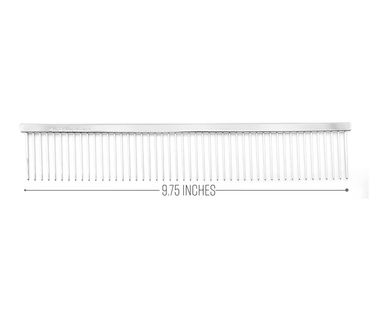
The course comb is an essential piece of equipment to have in your coat care toolkit. This is the Chris Christensen Buttercomb 004. It is known as a Poodle Comb, but it is the only comb that I will use on extra thick coats.
Pro Tip: Use this comb after the brush out to check for tangles and prevent mats. For the thickest coats, comb layer by layer using a pick, pick, pick action, as the comb cannot glide through the thickest of coats.
Tear Stain Prevention
This is an amazing product for removing and softening eye crusts. I use it in the salon regularly. This product also softens food that has crusted in the beard and mustache. This product also helps with tear stains.
Pro Tip: Keeping the eye area clean is a secret to preventing tear stains and eliminating odor around the eye area.
Rat Tail Combs

The Rat Tail Comb is very helpfull for tying up top knots.
Pro Tip: Creating straight lines when tying up the top knot prevents matting and makes the ponytail more comfortable.
Latex Bands
Anti Static Spray
Latex Bands prevent breakage in your dogs topknot, when compared to rubber bands
Pro Tip: Always make sure to slide a comb between the skin and the band once the ponytail is put in for safety reasons.
Anti Static Spray
Anti Static Spray
A good quality anti static spray helps to reduce static in the coat making brush out sessions a breeze.
Pro Tip: Once you have set the part in your dogs coat, mist the part with Magic Mist to set the part and keep it in place.
Tooth paste
Bamboo Toothbrushes
Brushing your pets teeth daily helps to prevent expensive dental bills and keeps your pets breath fresh and clean.
Pro Tip: Putting your pet on a non slip surface helps them to feel safe. Be careful not to hold to dog covering the soft area just behind the nostrils, as this blocks their airway.
Bamboo Toothbrushes
Bamboo Toothbrushes
Use these eco friendly tooth brushes to keep your pets breath fresh.
Ear wash
Ear cleansing is esesntial every time that the dog gets wet. This helps to prevent ear infections by drying moisture, as well as removing wax and debris.
Pro Tip: Fill each ear canal with the solution after the rinse, but before the towel dry. Rub the base of the ear, and allow the dog to shake it out. Then lightly blot the ear dry.
Caution: Do not use in abnormal looking ears, if the ears have a dark brown discharge, redness, swelling, or other discharge, seek veterinary help.
Igroom Squalane Care Shampoo

This is my favorite shampoo and conditioner for thick coats.
Pro Tip: Always brush and comb the dog from one end of the body to the other the same day as the bath. Preferably as the dog is drying, or once the dog is dry.

Caring for your dogs coat
How to prevent matted hair.
So, you want to grow your dogs hair longer. I hear this a lot. Dogs are beautiful with long flowing coats. That natural, scruffy, shaggy, puppy look is adorable. You try to keep the hair brushed, you really honestly do.
But your dog is young. She needs to learn. She doesn’t like it, That’s okay, that’s what a professional is for, right? Wrong! Pet groomers are actually pet stylists. The one responsible for caring for the condition of the dog is the owners of the dog. The reason for this is that the maintenance of the coat is a constant routine. The level of difficulty depends upon the length of the coat, and other factors such as:
1. Do you wash the dog?
2. Does the dog swim or go into a wading pool?
3. Do you leave a harness on the dog?
4. Does the dog wear clothing?
5. If the dog is in full coat, or has a lot of hair around the neck, does she wear a collar?
6. If you wash your dog, do you that very same day, thoroughly brush and comb that dog over every inch of it’s body?
All of these factors determine the amount of work necessary to maintain the coat. I specialize in maintaining a full coat. My own dogs, and many of my clients dogs have had coats in amazing condition.
It is a labor of love. The secret is dedication. It is not a chore, it’s actually a bonding time for you and your pets IF and only IF both of you enjoy it.
Sometimes it can become frustrating, the dog fights the brush, or you give the dog a quick bath with no brushing only to later realize that was a disastrous decision. Or you leave the cute Christmas sweater on for 3 days while we have freezing temperatures, only to end up with a completely shaved down dog.
Sometimes, clients think, no worries, the groomer has special techniques, special tools, and wonderful conditioning treatments that they are trained to use in the event that your dog gets a few little mats. And to an extent, this is true.
The problem is, when we brush out matted hair, it hurts. And when the dog already hates the brush, it can be traumatizing. Sometimes I can do it once, to save the dogs coat, but the next time, the dog says NO. I often have clients prefer for me to save the coat, to please keep the hair that I trimmed short underneath the last time, and to let the coat grow. But if the coat is matting at this shorter length, why should we grow it longer?
The dogs owner must listen to the pet. If the pet cannot tolerate the brush, then keep the hair shorter until the training and routine are established.
The routine and tools depend on the desired length of coat and the type of coat that the dog has. Long flowing silky coats benefit from the use of a Pin Brush, and a Comb, a Chris Christensen Buttercomb, and a Face Comb.
Cottony bushy coats benefit from the use of the flexible slicker brushes, a Long Pin Slicker, and the Chris Christensen Poodle Combs.
The type of pins on the slicker depend on the depth of coat and the area you are brushing. I use both and go back and forth using both brushes on each dog, using the stiffer shorter pins on mats, the legs, and sometimes under the arms, and the longer pins in the areas where the hair is longer and thicker.
Most slicker brushes either have short pins or angled pins. The short pins are useless for penetrating a coat that is more that a half inch long. I do not recommend any brushes with plastic coated tips.
Brushes with sharply angled pins have a lot of drag and pull in a thick coat. This can make brushing very uncomfortable for the dog. Therefore, the brushes that you choose need longer pins that are not too sharply angled.
People often ask, “Should I brush every day ?” Or “How often should I brush?”. The answer is different in each situation.
My own dogs have always been brushed on bath day, with the exception of long top knots (which is every 1-3 days) . The length of the coat determines the frequency of the bath days. Long, flowing coats every 5 days, Puppy cuts every 7-14 days. Summer cuts every 7-21 days. This system works only if you are very diligent to completely brush and comb the dog from one end of its body to the other on the same day as the bath is done.
If you are not washing the dog as regularly as I do, more frequent brushing is recommended.
Professional MAINTENANCE SERVICES
At Grande Style Dog Grooming in Tampa, we offer weekly and bi-weekly maintenance services to assist you with the care of your dogs' coat, providing personalized grooming services tailored to your pet's specific needs.
These are set as standing appointments on a routins schedulele to suit your needs.
How to brush your dog


Why we do not pluck a dogs ears
- Is there an alternative to plucking dog ear hair?
- Does plucking the hair hurt the dog?
- Is dog ear plucking necessary?
At Grande Style Pet Grooming, located in the Northdale/ Carrollwood area in Tampa, we do not believe that the pet groomers should excessively pluck their clients dogs ears. We only remove hair that is in the exogen phase, and releases easily with finger and thumb.
We never use ear powder, as this can clog the ears.
The dogs ear canal is shaped like a capital letter L, glands and hair line inside the dog’s ear. The glands produce wax, and the hair moves it up and out to clean the ear. This is the way it is supposed to naturally. Dogs ears are self-cleaning! A normal, clean ear should pink and free of debris.
In the past, it has been recommended that dogs should have hair-free ears and ear plucking has been a regular part of dog grooming. New evidence has revealed that ear plucking in the normal, healthy ear is not necessary. Excessive ear plucking may actually result in micro-trauma and inflammation to the ear canals. This may predispose your dog to an ear infection.
If your vet insists that ear hair be plucked, I recommend that the vet be the one perform the procedure.
Alternatively, ears can be trimmed of excessive long hairs from the ear. This can help reduce the amount of ear wax that gets trapped in the ear, thereby minimizing the ear odor. This is commonly recommended by veterinary dermatologists.
An ear cleansing solution can help reduce the incidence of ear problems. Ask your veterinarian which product would be best for your dog. In her presentation to Tucson groomers, “Ears: What Every Groomer Needs to Know”, Dr. Heide Newton, DVM, DACVD plainly stated that groomers should stop plucking ear hair from inside dog’s ears. “Healthy ears are self-cleaning”, stated Dr. Newton. She encouraged groomers to continue the practice of ear cleaning, however, using products formulated for ear care, and massaging the base of the ear to allow the product to loosen wax and debris from deep in the ear canal.
Another clear statement from Dr. Newton was that “Bathing with clean water will NOT cause ear infections.” Contaminated water may introduce microbes that lead to ear infections, but clean water is not a problem. The possibility of cross-contamination from an infected ear to the other ear or another animal is the one area where groomers might be at fault. It is very possible for pseudomonas bacteria to transfer from the ear to various surfaces and then be picked up by other animals or even humans. The most obvious sign of a pseudomonas infection is what vets call a “purulent exudates.” Translation: yucky discharge. If the groomer suspects an ear infection, Dr. Newton suggested the following protocol:
1. Clean the GOOD ear first.
2. If the ear with the suspected infection is cleaned, be gentle and use a non-stinging ear cleaner. The groomer may also choose to not clean an ear with a suspected infection, especially if it looks serious.
3. Disinfect everything that the dog has contact with or might spray with shaking of the ears. This includes, your hands, the tub, the faucets, any tools, the table, the kennel and bedding, and the tip or spout of the ear cleaner bottle.
In addition to ear discharge, other signs of ear abnormality are redness, itchiness, odor, swollen tissue of outer ear, hair loss on earflap, and scabs or scaliness. Ear problems are often quite complex and difficult to nail down and treat. A referral to the veterinary dermatologist can result in a quicker and more accurate diagnosis and more effective treatment, thus lessening the time the pet has to suffer with uncomfortable, often painful conditions. By encouraging pet parents to seek treatment for suspected ear problems, the professional groomer is serving the needs of the pet.
Veterinary dermatologists such as Dr. Newton, undergo several years additional training and examinations beyond that required of general practitioners.
Dr. Newton is part of Dermatology for Animals, a network of veterinary dermatologists serving the Southwest United States. In addition to working full-time in the Tucson practice, she currently serves on the American College of Veterinary Dermatology (ACVD) Exam Committee (the certifying board) and is a lecturer for the North American Veterinary Dermatology Forum (NAVDF) Resident Education Forum.
Some pets are prone to ear problems and may need a regular ear cleansing between veterinary visits. I suggest using an ear cleansing solution every time your pet gets wet, as this helps dry out any moisture in the ear canal. I follow the instructions in the video immediately after each and every bath or swim.
Ear cleansing can help remove dirt and wax that builds up as a normal part of epithelial migration (“self-cleaning”). It can also reduce the buildup of bacteria or yeast that may contribute to inflammation or infection. This is easy to do at home, see the video below demonstrating the correct ear cleaning procedure.
In my salon we always do this to prevent issues with your pets right after the final rinse in the tub ( only in healthy ears). Clients are encouraged to bring their own veterinarian recommended ear cleanser.
Because ear cleansers may contain chemicals that are harsh on the delicate ear canals, it is important to use only products as recommended by your veterinarian.
I personally avoid homemade preparations and products containing propylene glycol. If for any reason, your pet becomes agitated or the ear cleaning procedure is excessively painful for your pet, stop and seek veterinary advice.
Signs of ear trouble
•Strong or foul odour
•Redness or leathery ear flaps
•Scratching or rubbing at ears or side of head.
•Ear discharge & excessive debris
•Shaking or tilting of the head
•Not wanting the head or ears to be touched
•Irritability
In my salon, if I see any of these signs, I do not touch inside the ears at all. This is a controversial topic that continues to make the rounds in the grooming and veterinary world.
Some professionals think that ear plucking should be a part of a dog’s grooming regimen while others think it’s not.
According to veterinary dermatologists, plucking hair from a dog’s ear can do more harm than good. The procedure can cause microscopic tears in the tissues of the ear canal which can cause bacteria to invade and cause infection.
If recurrent ear infections are not a problem for your dog, there is no reason to pluck the hair from his ears regularly.
Most dermatologists who say that the dog needs plucking due to ear issues, also say that they must do it under anesthesia because it’s too painful to pluck an infected ear.
Just make sure the hair is well-trimmed, so the ear opening is not blocked and air flows freely. Keeping your pet’s ear hairs short can also prevent ear wax and debris from getting trapped.
If you have concerns about the pets ears, make an appointment with your veterinarian. For chronic issues, seek a referral to a veterinary Dermatologist.