Dog Grooming in Tampa
Services

Pomeranian Full Service Package
Full service package for dogs up to 20 lbs. includes tooth brushing, washed twice with a salon bath with premium shampoo and conditioner, we provide an ear wash for healthy ears, blow dry, pedicure with nails trimmed and filed, 15 minutes of de shedding and brushing, adorable handmade finishing touches and cologne are available on request. Plus the haircut that best suits your dog's needs and your specifications.
Average fee $85.-$95. Average time in the salon 1.5-2 hours, however this can fluctuate more or less, depending on the condition and behavior of the dogs ahead of yours, as well as the condition and behavior of your own dogs.
Bath Only Package
Bath service package for dogs up to 20 lbs. includes tooth brushing, washed 2x with premium shampoo and conditioner, we provide an ear wash for healthy ears, blow dry, pedicure with nails trimmed and filed, plus 15 minutes of de shedding and brushing. No trimming is included. Adorable finishing touches and cologne are available on request.
Average fee $55.-$65. Average time in the salon 1- 1.5hours, however this can fluctuate more or less, depending on the condition and behavior of the dogs ahead of yours, as well as the condition and behavior of your own dogs.
More information
To avoid disappointment, please have your pet brushed and combed before the appointment. We cannot accept dogs with matted hair, broken skin, eye ulcers, severe ear infections, heart conditions, and dogs over 16 years old.
Pomeranians and similar dogs have coats that require careful handling.

When properly Maintained, the undercoat is in balance with the outer coat.

This image shows how the air can flow through the properly maintained coat, because the undercoat is free from excessive packed in undercoat.
During the winter, the undercoat thickens and releases in the spring. The undercoat also will release in the fall, preparing for the winter coat. Dogs who are indoors year round, as well as spayed/neutered coats, may have irregular shedding cycles. The coat should be maintained at least every 3-4 weeks year round to allow air flow through the coat.
This image shows a packed undercoat. If this coat is not kept properly brushed, this excess coat will cause the dog to overheat and the hair will become matted.

Clipping the coat can cause an imbalance of the coat. The outer coat may go dormant permanently, causing the coat to regrow abnormally. The Outer coat also may take up to 7 years to correct itself, while the undercoat grows back out of balance with a Brillo pad texture.
Some dogs grow back fine, some regrow several times then go dormant. Some get alopecia at the first clipping.(this could be healt
Pomeranian Post Clipping Alopecia can happen. Whether it is associated with other health factors is irrelevant. The fact is that it almost always shows up immediately after being clippered.

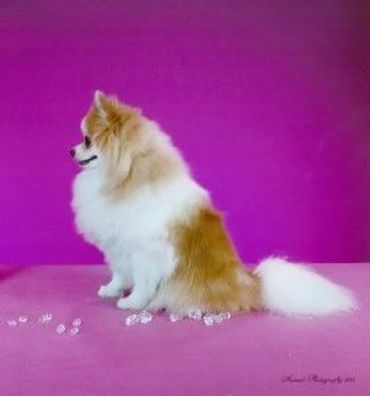
Sunny is in a proper Pomeranian style.

This Pomeranian's tail was scissored 2 years ago during a dog grooming session. You can see where the coarse coat was stunted in growth, while the undercoat is growing past the stunted outer coat growth.
If after reading this, you still want your dog clipped down as part of your pet grooming services, I will have you sign a waiver stating that there is a chance your dog's hair will not grow back, and if it does, it may look odd.

The best tools to maintain your dogs coat
Pin Brush

The pin Brush is necessary for dogs with Primitive coat types like the Pomeranian, Pekingese, American Eskimo, and similar coats.
Deep Penetration: A pin brush reaches deep into the fur to remove loose hair and prevent mats from forming near the skin.
Gentle Maintenance: Unlike stiff slicker brushes, a pin brush is gentle on a dog's delicate skin. It is perfect for everyday brushing or "line brushing" (parting the hair and brushing small sections from the skin outward)
Oil Distribution: The pins stimulate the skin and spread natural oils throughout the coat, keeping their signature floppy ears and long "furnishings" (leg/belly hair) soft and conditioned.
Follow with a Comb: After brushing, go through the coat with a steel wide tooth comb to ensure there are no hidden tangles left behind
Extra Firm Pin Slicker

This brush is my favorite dematting brush. It quickly removes tangles from your dogs' coat. This brush helps to remove packed in undercoat.
Pro Tip: Only use this brush to remove the mats, this is not a maintenance brush.
Course tooth comb
Course tooth comb

The comb is an essential piece of equipment to have in your coat care toolkit. The comb is used as a checking tool to make sure that the dog is properly brushed.
Pro Tip: Use this comb after the brush out to check for tangles, loose hair, and prevent mats.
Anti Static Spray
Course tooth comb

A good quality anti static spray helps to reduce static in the coat making brush out sessions a breeze.
Pro Tip: Mist the legs with Magic Mist before brushing to reduce static.
Tooth paste
Bamboo Toothbrushes

Brushing your pets teeth daily helps to prevent expensive dental bills and keeps your pets breath fresh and clean.
Pro Tip: Putting your pet on a non slip surface helps them to feel safe. Be careful not to hold to dog covering the soft area just behind the nostrils, as this blocks their airway.
Bamboo Toothbrushes
Bamboo Toothbrushes
Use these eco friendly tooth brushes to keep your pets breath fresh.
Ear wash
Ear wash
Ear wash
Ear cleansing is esesntial every time that the dog gets wet. This helps to prevent ear infections by drying moisture, as well as removing wax and debris.
Pro Tip: Fill each ear canal with the solution after the rinse, but before the towel dry. Rub the base of the ear, and allow the dog to shake it out. Then lightly blot the ear dry.
Caution: Do not use in abnormal looking ears, if the ears have a dark brown discharge, redness, swelling, or other discharge, seek veterinary help.
How to brush your dog

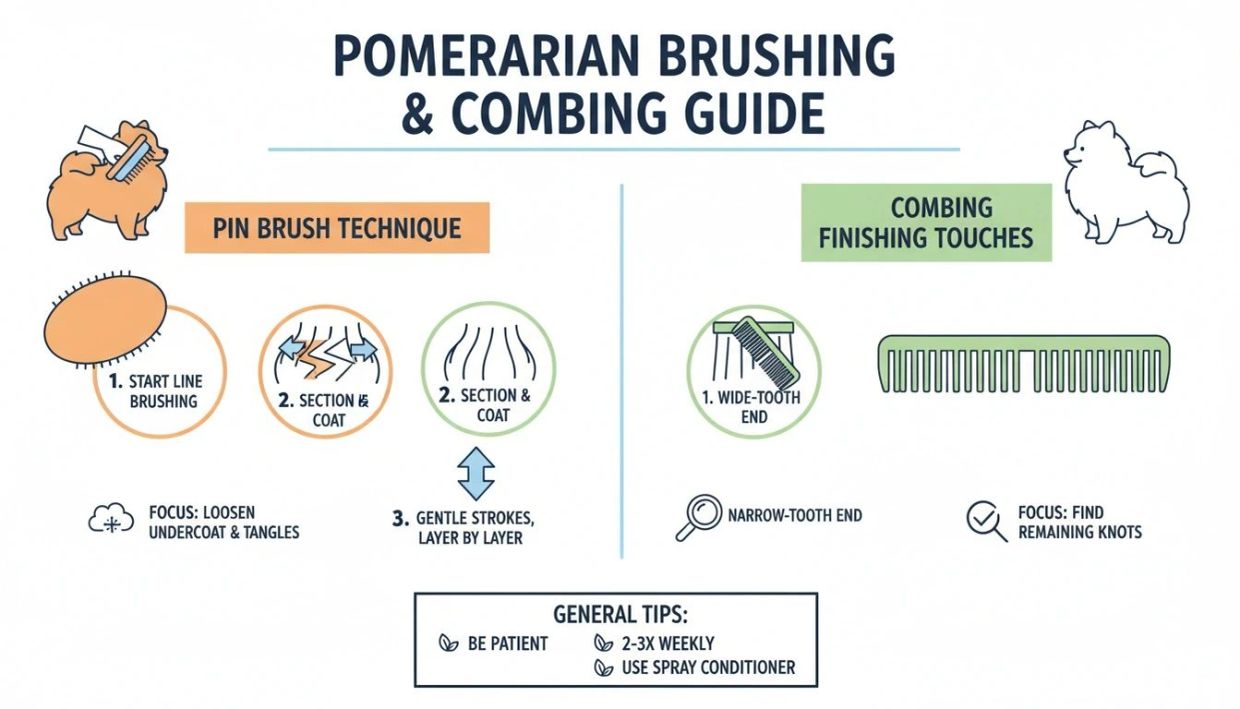
HOW TO PREVENT MATTED HAIR.
You try to keep the hair brushed, you really honestly do.
But your dog is young. She needs to learn. She doesn’t like it, That’s okay, that’s what a professional is for, right? Wrong! Pet groomers are actually pet stylists. The one responsible for caring for the condition of the dog is the owners of the dog. The reason for this is that the maintenance of the coat is a constant routine. The level of difficulty depends upon the length of the coat, and other factors such as:
1. Do you wash the dog?
2. Does the dog swim or go into a wading pool?
3. Do you leave a harness on the dog?
4. Does the dog wear clothing?
5. If the dog is in full coat, or has a lot of hair around the neck, does she wear a collar?
6. If you wash your dog, do you that very same day, thoroughly brush and comb that dog over every inch of it’s body?
All of these factors determine the amount of work necessary to maintain the coat. I specialize in maintaining a full coat. My own dogs, and many of my clients dogs have had coats in amazing condition.
It is a labor of love. The secret is dedication. It is not a chore, it’s actually a bonding time for you and your pets IF and only IF both of you enjoy it.
Sometimes it can become frustrating, the dog fights the brush, or you give the dog a quick bath with no brushing only to later realize that was a disastrous decision. Or you leave the cute Christmas sweater on for 3 days while we have freezing temperatures, only to end up with a completely matted dog.
Sometimes, clients think, no worries, the groomer has special techniques, special tools, and wonderful conditioning treatments that they are trained to use in the event that your dog gets a few little mats. And to an extent, this is true.
The problem is, when we brush out matted hair, it hurts. And when the dog already hates the brush, it can be traumatizing. Sometimes I can do it once, to save the dogs coat, but the next time, the dog says NO.
The routine and tools depend he type of coat that the dog has. Full coats benefit from the use of a Pin Brush, and a Chris Christensen Buttercomb #004, and a Face Comb.
The type of pins on the brush depends on the depth of coat and the area you are brushing. I use both and go back and forth using both brushes on each dog, using the stiffer slicker brush on mats, packed in undercoat, and the pin brush in the areas where the hair is longer and thicker.
Most slicker brushes either have short pins or angled pins. The short pins are useless for penetrating a coat that is more that a half inch long. I do not recommend any brushes with plastic coated tips.
Brushes with sharply angled pins have a lot of drag and pull in a thick coat. This can make brushing very uncomfortable for the dog. Therefore, the brushes that you choose need longer pins that are not too sharply angled.
People often ask, “Should I brush every day ?” Or “How often should I brush?”. The answer is different in each situation.
Primitive coat types like the Pomeranian need to be brushed at least once a week, from one end of the body to the other, followed by combing from the skin out all over. Plan at least a half hour a week for the brush out on a Pomeranian with a full coat. On bath day, brushing and combing must be done by the end of the day, or else matting will begin. Please understand that one bath without a proper brush out with combing can result in the need for a complete shave down, which will potentially completely change the coat forever in a very negative way.
HERE ARE A FEW KEY THINGS TO KNOW ABOUT THE PRIMITIVE COAT:
Coat Structure and Traits
- Three Layers: Includes a dense insulating fuzz layer next to the skin, a soft middle undercoat, and long weather-resistant guard hairs on top.
- Hard to See Skin: The fur is so thick and tightly packed that it is nearly impossible to part down to the skin compared to standard double coats.
- Less Soft/Cottony: The texture tends to be harsher and more resilient.
- Natural Shedding: Drops heavy amounts of undercoat during seasonal blowouts rather than a constant light shedding.
- The takeaway is simple: a well maintained Dog is essential to having a healthy, happy, handsome dog.
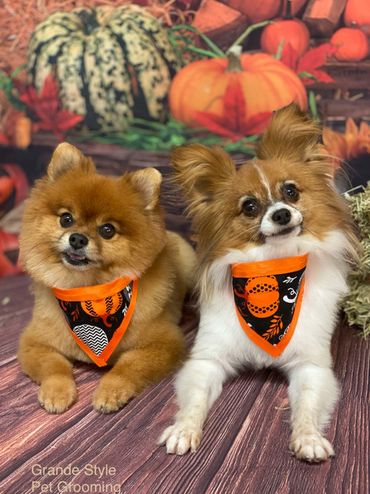
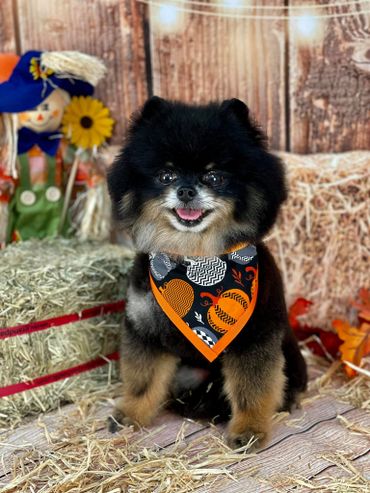
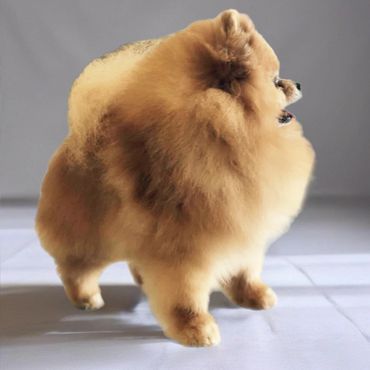
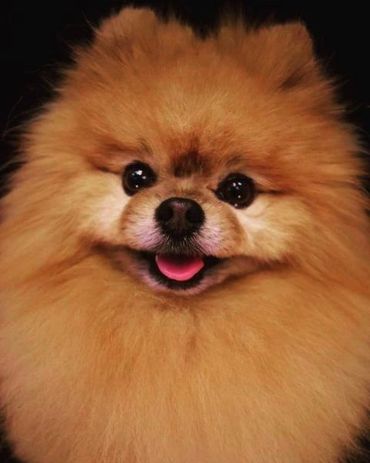
Full Coat Pomeranian Gallery


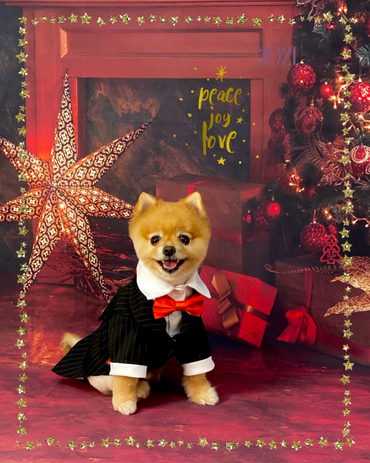
Clipped down Pomeranian & Friends Gallery